





Passive Fire
Containing Fire. Buying Time.
Fire Doors

Fieldway’s FIRAS-accredited teams supply, install and inspect fire doors across occupied buildings, including remedials and replacements where an existing door no longer meets standard.
Compartmentation

Dividing a building into fire-resistant compartments contains fire and smoke at its source, protecting escape routes and giving people more time to get out safely.
Fire Stopping & Penetration Seals

Every gap, pipe run and cable penetration is a potential route for fire and smoke to spread. Fieldway identifies and seals these gaps properly, not just patches over them.
Door & Loft Surveys

A clear survey shows exactly where a building’s passive fire protection stands today, and what needs fixing, giving clients a straightforward plan for closing any gaps.
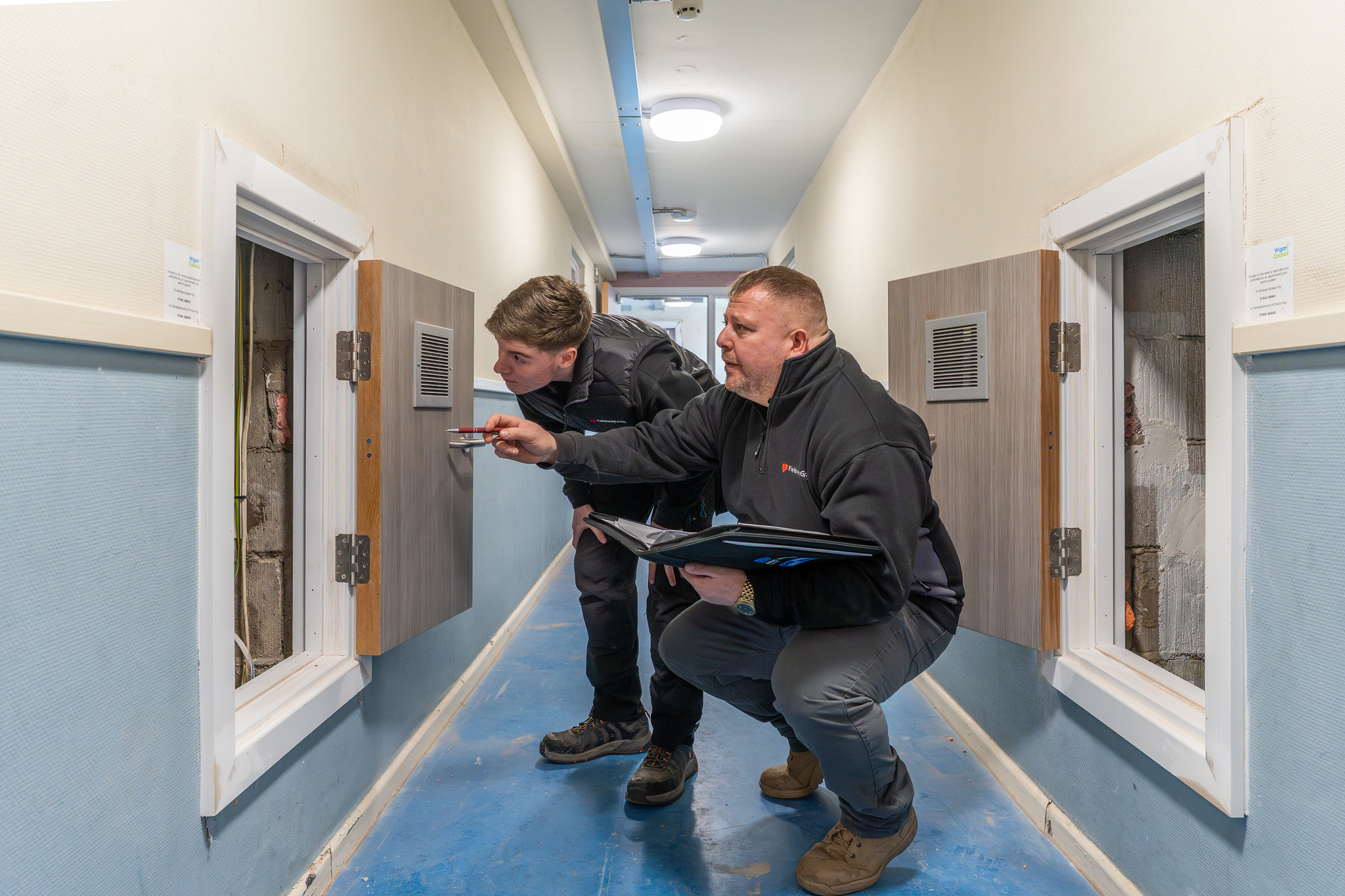
Riser Cupboard & Bin Chute Upgrades

Riser cupboards and bin chutes are common weak points in a building’s passive fire protection, and Fieldway upgrades both to close that risk.
Featured Project
Fire Risk Assessment Programme
Building Compliance
We were employed as the Principal Contractor by Brentwood Borough Council to undertake FRA works at 10 blocks of flats

Latest Group Projects
Discover how we’ve helped clients contain fire and protect residents, showcased through our latest passive fire projects.
Our Group Clients


Have a project to discuss?
Talk to us about passive fire protection for your building

From fire door installation to compartmentation and fire stopping, Fieldway delivers passive fire protection that buys people the time they need.
Passive fire protection often means access to occupied homes, so Fieldway’s surveys and installations are planned around residents’ daily lives, backed by full photographic and digital records of every job.
What we do
Fieldway’s passive fire protection services contain fire and smoke, giving people time to get out safely.






Accreditations


Passive Fire FAQ’s
How we deliver?
Passive fire work often means access to occupied homes, so our surveys and installations are planned around residents’ daily lives, not the other way round. Every survey produces a clear report showing the building’s current level of protection and the priority actions needed, giving clients a straightforward plan for closing any gaps, backed by full photographic and digital records.
Why choose Fieldway?
Passive fire protection stops a fire spreading before it starts, containing fire, heat and smoke within a building’s structure long enough for people to get out safely. Fieldway’s in-house FIRAS-accredited teams supply, install and inspect fire doors, deliver compartmentation and fire stopping, and carry out the surveys that tell a client exactly where their passive fire protection stands. Where a survey identifies a gap, we resolve it, then document it, so every building has a clear, current record of its passive fire compliance.
What is passive fire protection?
Passive fire protection contains a fire and slows its spread, giving people time to escape and fire services time to respond. Fire doors, compartmentation, fire stopping and smoke seals are all passive fire protection.
How often should fire doors be inspected?
Fire doors in communal areas of residential buildings should be inspected quarterly, and more frequently in higher-risk buildings, in line with government guidance following the Fire Safety Act 2021. Fieldway’s inspection programmes are built around each client’s actual risk profile.
What accreditation do your fire door installers hold?
Fieldway’s teams are FIRAS-accredited, a third-party certification scheme covering the installation, inspection and maintenance of fire doors and passive fire protection products.
What is compartmentation and why does it matter?
Compartmentation divides a building into fire-resistant sections, so a fire in one area doesn’t spread unchecked through the whole building. It relies on fire doors, fire stopping and structural fire-resistant materials all working together.
Can passive fire protection be retrofitted into an occupied building?
Yes. Most of Fieldway’s passive fire protection work happens in buildings that stay occupied throughout, with surveys and installations planned around residents’ daily lives rather than requiring buildings to be vacated.
What’s the difference between active and passive fire protection?
Passive fire protection contains a fire and stops it spreading, such as fire doors and compartmentation. Active fire protection detects a fire and helps put it out, such as alarms and sprinklers. Most buildings need both, working together.


Get In Touch
Have questions about our passive fire services, or want to learn more? We’d love to hear from you. Contact us via phone, email, or our form.
| 0151 480 9909 | |
| enquiries@fieldway.co.uk |
Thank you! Your form has been successfully submitted. Someone will be in touch with you soon.
Error sending form.